
The Finance Ministry has refuted allegations that US pressure influenced the decision to levy a 0.4% Merchant Discount Rate (MDR) on select UPI payments. It clarified that NPCI guidelines prioritise RuPay credit cards on UPI to foster a domestic payment ecosystem and that the MDR introduction aims to create a sustainable revenue model for smaller domestic companies, thereby protecting India's sovereignty in digital payments.

The opposition has intensified its criticism of the government's decision to impose a 0.4 per cent Merchant Discount Rate (MDR) on UPI transactions above Rs 2,000, effective October 15. Leaders like Rahul Gandhi and Jairam Ramesh allege the move is a result of US pressure, particularly from American card companies, and demand an immediate rollback, warning of increased costs for consumers.
The opposition has strongly criticised the government's decision to introduce a 0.4% Merchant Discount Rate (MDR) on UPI transactions above Rs 2,000 for merchants, effective October 15. They allege the move is a result of US pressure and will lead to increased commodity prices, calling it a "betrayal" of the common man. The government, however, clarifies that customers will not be charged, and the MDR applies only to merchants for larger transactions.

The Congress party has accused the Indian government of imposing new charges on UPI transactions due to pressure from the United States, specifically to benefit American card companies. The opposition party demanded the withdrawal of the decision, calling it "anti-national" and alleging it fills the coffers of US firms while burdening Indian citizens. The government, however, clarified that the Merchant Discount Rate (MDR) charges apply only to commercial transactions above Rs 2,000 and are not levied on consumers, a stance supported by the BJP which accused Congress of spreading "fake news".

The BRICS summit in New Delhi brings together leaders from major emerging economies to address global challenges like trade disputes, geopolitical upheavals, and the economic impact of conflicts in Ukraine and West Asia. India, as chair, aims to position BRICS as an economic growth engine, focusing on the Global South's food, energy, and supply chain security. The summit also highlights the grouping's expansion and its growing influence in global governance.

Chinese President Xi Jinping's upcoming visit to India for the BRICS summit is a pivotal diplomatic event poised to significantly impact bilateral ties and global cooperation amidst ongoing international instability.
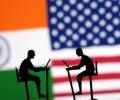
A think tank, GTRI, has urged India to resist US pressure regarding its UPI policies, advocating for the defence of competition, policy autonomy, and the long-term sustainability of its payments ecosystem. This comes as the Lok Sabha passed a bill allowing charges on UPI transactions, a move GTRI suggests should not be influenced by foreign trade complaints.

The Indian government has approved the sale of a 60.72 per cent stake in IDBI Bank Ltd to Canadian billionaire Prem Watsa's Fairfax Financial Holdings Ltd for approximately 52,878 crore, a move that reflects improving India-Canada ties and marks a significant turning point for the bank.

'All these reports and announcements by the US seem like attempts to gain a lever in trade deal negotiations with India.'

India is hosting the BRICS summit, leveraging the platform to address global trade tensions and champion the developmental priorities of the Global South, including food, energy, and supply chain security. The summit, attended by leaders like President Xi Jinping and Vladimir Putin, will focus on resilience, innovation, cooperation, and sustainability, with India aiming to strengthen intra-BRICS collaboration and discuss global matters. The expanded BRICS grouping represents a significant portion of the world's population and GDP, making its discussions crucial for global economic stability.

A major political controversy has erupted in Tamil Nadu as the TVK alleges the DMK attempted horse-trading to poach its MLAs, leading to arrests and an ongoing police investigation into the high-stakes political maneuvering.

The National Stock Exchange's initial public offering (IPO), expected to raise around Rs 30,000 crore, is likely to open for public subscription on September 18 and list on September 25, potentially becoming India's largest IPO.

Foreign institutional investors have withdrawn nearly $40 billion from Indian equities in the last two years and, according to Bernstein analysts, have 'little reason' to invest for the long-term, though they may 'return to trade'. The brokerage highlights challenges such as struggling large-caps, disruption from new technologies, and difficulties accessing small- and mid-caps (SMIDs) at an institutional scale.

Indian stock market investors are closely monitoring crude oil prices, geopolitical developments in West Asia, and the implications of the US Sanctioning Russia and Iran Act, which could impose tariffs on countries, including India, that purchase Russian crude.

A coalition of 25 Democratic-ruled US states has filed a lawsuit against the Trump administration's decision to impose new tariffs on 60 economies, including India. The states contend that these tariffs, ostensibly aimed at combating forced labour, are illegal taxes that will raise costs for consumers and businesses, and were implemented without proper legal justification.

'Tariff action relating to the excess-capacity investigation will be even more susceptible to judicial overturn.'
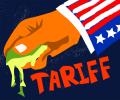
A bipartisan group of US senators has introduced a comprehensive bill imposing extensive sanctions on Russia, with India identified as one of five countries that could incur tariffs for its continued purchase of Russian oil.

Senior Congress leader Shashi Tharoor has articulated India's position on BRICS, advocating for it to be a "non-West, but not anti-West" platform, a stance he believes is crucial for India's national interest. He highlighted the prestige of hosting the BRICS summit, India's responsibility to represent the Global South, and the significance of bilateral meetings, particularly with China and Russia. Tharoor also addressed the strained India-China relations, citing border issues and trade leverage, and discussed the challenges within BRICS, including difficulties in achieving consensus on global issues and trade imbalances, while also considering the need for diversified international relations amidst unpredictable US sanctions.

Indian equity benchmark indices Sensex and Nifty experienced a significant tumble in early trade, with the Sensex tanking nearly 700 points, driven by uncertainty surrounding US-Iran negotiations, a fresh spike in crude oil prices, and persistent foreign fund outflows.

New Delhi was told it had given something up; in reality it had stopped talking about it, notes Dr Abhishek Puri.
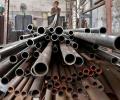
India's government is set to release its draft National Steel Policy for public consultation, aiming for over 600 million tonnes of steelmaking capacity and 500 million tonnes of consumption by 2047. The policy will also introduce a ~5,000-crore scheme to incentivise small steel producers for carbon emission reduction and address challenges like raw material availability and technological dependence.
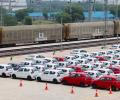
India's Ministry of Power has notified the third phase of Corporate Average Fuel Economy (CAFE-III) norms for passenger vehicles, effective from April 1, 2027, which set relatively softer efficiency targets for lighter cars and demand greater improvements from heavier vehicles, a move expected to benefit manufacturers like Maruti Suzuki India.

In recent years, China and Russia have pushed for de-dollarisation within BRICS, which India has resisted. One reason is that India does not want to hurt its relationship with the United States, and another is the fear of China controlling trade because the renminbi is considered the strongest currency in the bloc today.

The highlight of the successful BRICS Summit was its ability to deliver a joint statement that all members, including Iran and the United Arab Emirates, embroiled in the war in West Asia, signed.
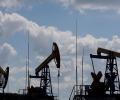
India's Russian crude oil imports reached a five-month low in September, dropping to 1.75 million barrels per day, as Indian refiners strategically diversify their energy supplies amidst evolving geopolitical landscapes and robust domestic demand, according to ship tracking data.

India's national security adviser was in Dhaka for roughly three-quarters of the day on Thursday to prepare the ground for Bangladesh Prime Minister Tarique Rahman's visit to New Delhi.

One of the important topics of discussion between the two leaders is expected to be the Northern Sea Route and the Chennai-Vladivostok Maritime Corridor.

Xi's bilateral meeting with Modi was substantial and readouts from both sides gave indications of rapprochement, if not a reset of bilateral relations between India and China, notes Ambassador T P Sreenivasan.

A member of the National Traders' Welfare Board (NTWB) has urged the central government to withdraw its decision to impose a 0.4 per cent Merchant Discount Rate (MDR) on UPI transactions exceeding Rs 2,000, effective from October 15. He warned that the new charge, which will be borne by merchants, could negatively impact business growth and lead to higher prices, contradicting the government's 'ease of doing business' policy.

Prime Minister Narendra Modi conveyed to Chinese President Xi Jinping that peace and tranquillity along the frontier remains an "essential" basis for the development of India-China relations, even as the two leaders welcomed "steady progress" in bilateral ties during their talks on the sidelines of the BRICS summit.

The UK has announced a comprehensive sanctions regime against Israeli settlements in the West Bank, banning the import of goods and targeting entities involved in settlement expansion. Foreign Secretary Ed Miliband condemned the "ethnic cleansing of Palestinians" and highlighted international support for the UK's stance, while Israel reacted strongly with counter-measures.

Filipino tennis sensation Alexandra Eala defeated Ukrainian Oleksandra Oliynykova 6-1, 6-4 to advance to the third round of the U.S. Open. Eala, who previously lost to Oliynykova, showcased a dominant performance, particularly in the first set, and attributed her win to patience and consistent focus. Her victory was celebrated by a strong Filipino contingent in New York.

Tamil Nadu's ruling Tamilaga Vettri Kazhagam (TVK) won bypolls in Madurantakam and Dharapuram, strengthening its minority government. Concurrently, the Bharatiya Janata Party (BJP) secured emphatic victories in West Bengal's Nandigram and Muslim-majority Rejinagar, consolidating its post-TMC rule position. The BJP also established a significant lead in Assam's Nagaon Lok Sabha bypoll, and its ally AINRC retained Thattanchavady in Puducherry.

Chinese Foreign Minister Wang Yi stated that President Xi Jinping and Prime Minister Narendra Modi reached a crucial consensus during the BRICS summit, agreeing that China and India should be partners, not rivals. The leaders pledged to maintain peace and tranquility in border areas, deepen cooperation, and support each other in multilateral forums, aiming to strengthen the Global South and promote a multipolar world order.

A proposed Rs 1,200 crore Secretariat-Assembly complex in Pattinapakkam, Chennai, has ignited significant opposition from local fishing communities and various political parties. Residents fear displacement, loss of livelihood, and environmental damage, citing ancestral rights and broken promises. Political leaders across the spectrum are urging Chief Minister C Joseph Vijay to reconsider the site, highlighting concerns about ecological impact, traffic, and financial priorities.

Tata Group's British luxury carmaker Jaguar Land Rover (JLR) announced plans to reduce its global workforce by approximately 4,000 roles over the next two years, aiming for 1.7 billion in savings to enhance sustainable profitable growth and invest in future technologies.

In many ways, 17th century India occupied a position in the global economy comparable to that of the United States today. Just as millions of people now look towards America because of its economic opportunities, merchants, adventurers and trading companies once looked towards India.

BRICS nations have successfully reached a consensus on a joint statement following extensive negotiations, with India playing a crucial role in bridging differences, particularly among West Asian members like Iran, Saudi Arabia, and the UAE, despite regional conflicts and geopolitical tensions.

Russian President Vladimir Putin is set to visit India for a three-day trip to attend the 18th BRICS Summit and engage in bilateral discussions with Prime Minister Narendra Modi. The summit will focus on strengthening strategic partnerships and addressing international issues, with Putin also scheduled to meet other world leaders.

A 47-year-old man from Palakkad has been arrested for allegedly cheating a Thiruvananthapuram resident of over Rs 1.19 crore in an online trading scam.
